
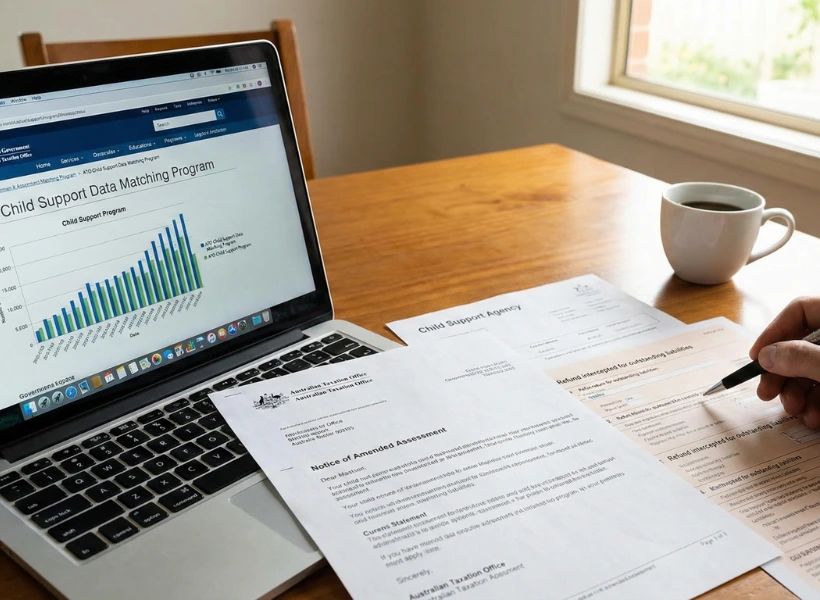
The Australian Taxation Office continues to expand its use of data matching programs to improve compliance and accuracy across the tax system. One key initiative that affects many individuals is the child support data matching program, which will apply across multiple income years.
For taxpayers who pay or receive child support, understanding how this data is used and how it may affect tax obligations is important. From a financial advisory services perspective, awareness and preparation can help prevent unnecessary issues with lodgements and compliance.
What Is the ATO Child Support Data Matching Program
The Australian Taxation Office has confirmed that it will collect child support data from Services Australia for the 2025 to 2027 income years.
This data will be matched against existing ATO records to identify inconsistencies, missing lodgements and potential compliance issues. The ATO has indicated that records relating to up to 300,000 individuals may be obtained each financial year under this program.
Official information about ATO data matching programs is available on the ATO website.
https://www.ato.gov.au/about-ato/commitments-and-reporting/in-detail/privacy-and-information-gathering/data-matching-programs
What Information Is Being Matched
The data collected under this program includes personal and child support related details. This may involve names, addresses, phone numbers and dates of birth, as well as child support reference numbers, role types and child support categories.
The purpose of matching this information is to ensure that income reported to Services Australia aligns with income reported to the ATO. Differences between the two may prompt further review or contact from the ATO.
Why the ATO Is Using Child Support Data
The ATO has outlined several objectives for this program. One key aim is to help Services Australia more accurately assess child support obligations and improve the collection of outstanding child support debts.
Another important goal is identifying individuals who may have failed to lodge tax returns or who may not have met their lodgement obligations. In some cases, the ATO may also contact individuals to confirm whether a tax return is required for a particular year.
This approach reflects a broader compliance strategy used by many financial advisory firms to encourage early correction rather than enforcement.
How This Can Affect Taxpayers
For many taxpayers, the data matching process will have no impact if their records are accurate and up to date. However, issues can arise where income has been underreported, tax returns have not been lodged, or information provided to different agencies does not align.
Individuals who receive or pay child support may be unaware that discrepancies between agencies can trigger ATO attention. This is where professional accounting services can assist in reviewing records and resolving issues early.
Common Issues Identified Through Data Matching
Data matching often highlights practical issues rather than deliberate non compliance. These can include missed tax returns, outdated personal details, incorrectly reported income or misunderstandings about reporting obligations.
Regular reviews with a business finance advisor or accountant help ensure that information remains consistent across agencies and that obligations are met correctly.
What Taxpayers Should Do Now
Taxpayers who are involved in child support arrangements should review their tax lodgement history and ensure all required returns have been submitted. It is also important to check that income information provided to Services Australia matches tax records.
Engaging financial advisory services allows individuals to address potential issues before the ATO initiates contact. Early action often leads to simpler outcomes and reduced stress.
How Professional Advice Can Help
ATO data matching programs are designed to identify gaps and inconsistencies. While this may sound concerning, it also provides an opportunity for taxpayers to correct errors and finalise obligations.
Working with experienced accounting services ensures that lodgements are accurate, records are complete and communication with the ATO is handled professionally. Financial advisory firms play an important role in helping taxpayers understand their position and respond appropriately if contacted.
At JMB Tax, we assist individuals by reviewing tax histories, clarifying reporting obligations and liaising with the ATO where required. Our approach focuses on accuracy, compliance and peace of mind.
Frequently Asked Questions
Q. Does the ATO automatically penalise taxpayers through data matching?
No. Data matching is primarily used to identify discrepancies. In many cases, the ATO contacts taxpayers to clarify information or request lodgement before any penalties are considered.
Q. Who is affected by the child support data matching program?
Individuals who pay or receive child support during the 2025 to 2027 income years may be included. The program applies to a large number of taxpayers.
Q. What happens if my records do not match?
The ATO may contact you to request clarification, lodgement of missing returns or updated information. Professional advice can help manage this process.
Q. Do I need to take action if everything is correct?
If your tax returns are up to date and accurate, no action may be required. However, reviewing your records provides reassurance.
Q. Who should I speak to if I am unsure?
A qualified accountant or advisor offering financial advisory services can review your situation and provide guidance.
Conclusion
The ATO child support data matching program highlights the importance of accurate reporting and timely lodgements. While the process may feel intrusive, it is designed to improve accuracy and fairness across the system.
If you pay or receive child support and want confidence that your tax affairs are in order, JMB Tax can help. Our financial advisory services and accounting support are designed to assist Australian taxpayers with clarity, compliance and confidence.