
JMB Consultants

Categories
Accounting

Cash Acceptance Rules From January 2026: What Australian Businesses Should Know

From 1 January 2026, new cash acceptance rules will come into effect across Australia. These changes are designed to ensure that consumers can continue to use cash for essential purchases, even as digital payments become more common. For many businesses, especially those operating in retail, fuel, and grocery sectors, this update brings new compliance responsibilities that should not be ignored.

From a business and financial advisory perspective, understanding these rules early gives business owners time to assess their obligations and prepare their systems properly. Waiting until the rules take effect could expose businesses to avoidable compliance and operational risks.

What Are the Cash Acceptance Rules

The Australian Government has confirmed that most food, grocery, and fuel retailers must accept cash for in person transactions of 500 dollars or less. This applies to transactions made between 7 am and 9 pm.

According to guidance published by the Australian Government, these regulations are intended to protect access to essential goods and services. The mandate is scheduled to begin on 1 January 2026 and will be reviewed after three years to confirm it is operating as intended.

Official resource:
Australian Government Treasury announcement on mandating cash acceptance from 1 January 2026
https://ministers.treasury.gov.au/ministers/jim-chalmers-2022/media-releases/mandating-cash-acceptance

Which Businesses Must Accept Cash

The rules generally apply to businesses selling essential goods such as groceries and fuel. However, not all businesses are treated the same.

Small businesses with an annual turnover under 10 million dollars are generally exempt from the mandate. An important exception applies where a small business shares a trademark or brand with a larger retailer. In these cases, the cash acceptance requirement may still apply.

Because these distinctions depend on structure, branding and turnover, many business owners seek clarification from business advisory services firms to confirm whether they fall within the scope of the mandate.

Why These Rules Matter for Business Owners

At first glance, accepting cash may seem like a simple operational change. In reality, it can affect several aspects of a business.

Cash handling impacts staff training, security procedures, point of sale systems, and daily reconciliation. It also increases the importance of accurate recordkeeping. From a tax perspective, cash transactions must still be correctly reported for GST and income tax purposes.

This is where business and financial advisory services become important. Understanding how operational changes affect accounting and tax obligations helps businesses avoid issues later.

Accounting and Compliance Considerations

Businesses that increase or reintroduce cash payments often underestimate the additional pressure this places on their accounting processes. Manual cash handling increases the risk of errors if systems are not updated or staff are not properly trained.

Professional accounting services help ensure that cash transactions are recorded accurately, reconciled regularly, and supported by appropriate documentation. The Australian Taxation Office requires businesses to keep complete and accurate records of all transactions, including cash sales.

Official resource:
ATO guidance on record keeping for businesses
https://www.ato.gov.au/businesses-and-organisations/preparing-lodging-and-paying/record-keeping-for-business

Poor cash records can lead to GST discrepancies, audit queries, and unnecessary stress for business owners. The ATO confirms that GST and income reporting rules apply equally to cash and electronic payments.

Preparing Your Business Before January 2026

The most effective approach is preparation rather than reaction. Businesses should review whether the cash acceptance rules apply to them, assess their current payment systems, and update internal processes where required.

Government guidance encourages businesses to review their systems early rather than waiting until enforcement begins. Early preparation helps reduce disruption and compliance risk.

Speaking with a financial advisor and accountant before January 2026 can help identify gaps in systems, procedures, or record-keeping well ahead of time.

How Professional Advice Can Help

Regulatory changes rarely exist in isolation. Changes to payment rules often highlight broader compliance, accounting, and operational issues within a business.

A proactive business and financial advisory approach helps businesses understand their obligations, implement compliant processes, and continue operating efficiently. At JMB Tax, we support Australian businesses by reviewing their structure, turnover, branding arrangements, and accounting systems to ensure they are prepared for regulatory change.

If you are unsure whether your business must accept cash from January 2026, or you want confidence that your systems are compliant, seeking professional advice early can help prevent issues later.

Frequently Asked Questions

Q. Does every business have to accept cash from January 2026?

No. The mandate mainly applies to food, grocery, and fuel retailers. Many small businesses are exempt unless they share a trademark or brand with a larger retailer. Official details are available through the  Australian Government Treasury publications.

Q. What happens if a business refuses to accept cash?

Businesses that fall under the mandate and do not comply may face regulatory consequences. Understanding whether the rules apply to your business is essential to avoid compliance issues.

Q. Does accepting cash affect GST reporting?

Yes. Cash transactions must be accurately recorded and included in GST reporting. The Australian Taxation Office applies the same reporting rules to cash and electronic payments.

Q. Can small businesses operate as card only?

Some small businesses may be exempt, but exemptions depend on turnover and branding arrangements. Professional advice can help clarify your position.

Q. Who should I speak to about preparing for these changes?

A qualified financial advisor and accountant with experience in business compliance can review your circumstances and help you prepare well before the rules apply.

Conclusion

The cash acceptance rules starting in January 2026 are a clear reminder that regulatory changes can directly impact day to day business operations. With the right preparation and professional support, businesses can adapt smoothly and remain compliant.

If you are looking for practical business and financial advisory support, JMB Tax is here to help. Our advisory and accounting services are designed to keep your business compliant, efficient, and prepared for change.

Categories
Taxation

GST Credits Have a 4 Year Time Limit: What Businesses Need to Know

Many Australian businesses are unaware that GST credits do not last forever. If GST credits are not claimed within the allowed timeframe, they can be permanently lost. This can have a direct impact on cash flow and overall business finances.

From the perspective of financial advisory services, this rule highlights why regular reviews and proactive planning are essential. A trusted business finance advisor can help businesses avoid missed opportunities and costly compliance issues.

What Is the 4 Year Time Limit on GST Credits

The Australian tax system places a strict time limit on claiming GST credits and fuel tax credits. In most cases, these credits must be claimed within four years from the due date of the original Business Activity Statement where the credit could have been claimed.

Once this four year period expires, the Australian Taxation Office has no discretion to allow the credit, even if the business was entitled to it. This rule is separate from the general review period and is applied very strictly.

Official guidance on this rule is provided by the Australian Taxation Office.
https://www.ato.gov.au/businesses-and-organisations/gst-excise-and-indirect-taxes/gst/claiming-gst-credits/time-limits-for-claiming-gst-credits

Why This Rule Matters for Businesses

Unclaimed GST credits represent real money. For some businesses, especially those with high expenses or fuel usage, the value of missed credits can be significant.

Many financial advisory firms see businesses discover unclaimed credits only when it is too late. This often happens when records are not reviewed regularly or when BAS lodgements are handled reactively rather than strategically.

Strong accounting services play a critical role in preventing this. Accurate and timely BAS preparation ensures credits are identified and claimed within the allowable period.

Common Reasons Businesses Miss GST Credits

There are several reasons GST credits are missed or delayed.

Some businesses change accountants and historical records are not reviewed properly. Others focus only on current BAS lodgements and overlook past periods. In some cases, poor record keeping or incorrect coding of expenses leads to credits being missed entirely.

This is where proper accounting servicing makes a difference. Ongoing review processes reduce the risk of credits approaching expiry unnoticed.

What If GST Credits Are Close to Expiring

If GST credits are nearing the end of the four year time limit, businesses still have options, but timing is critical.

Instead of requesting amendments through general correspondence, businesses may be able to claim eligible credits in their next BAS if it falls within the four year period. Another option is lodging a revised BAS for the original period, which is often processed faster. In some cases, lodging a valid objection before the time limit expires may also be appropriate.

Professional small business accounting services can assess which approach is suitable and help action it correctly before credits are lost.

The Importance of Record Keeping

The Australian Taxation Office requires businesses to keep complete and accurate records of all transactions, including tax invoices and expense documentation. These records support GST credit claims and must be retained for compliance purposes.

Official ATO record keeping guidance for businesses is available here.
https://www.ato.gov.au/businesses-and-organisations/preparing-lodging-and-paying/record-keeping-for-business

Without proper documentation, GST credits may be denied even if claimed within time. This highlights why structured accounting business services are essential, especially as businesses grow.

How Professional Advice Can Protect Your Business

The four year GST credit rule shows why GST compliance should not be treated as a once a quarter task. It requires ongoing oversight and strategic review.

A business accounting service that works alongside financial advisory services helps businesses identify risks early, recover missed credits where possible and improve internal processes to avoid repeat issues.

At JMB Tax, we support businesses by reviewing historical BAS lodgements, assessing GST risks and ensuring credits are claimed correctly and on time. Our approach focuses on long term compliance and financial clarity.

Frequently Asked Questions

Q. What happens if GST credits expire?

Once the four year time limit has passed, the Australian Taxation Office cannot allow the credit. The entitlement is lost permanently, even if the business was eligible.

Q. Is the four year rule the same as the ATO review period?

No. The four year GST credit time limit is separate and more strict than the general review period.

Q. Can I amend a BAS to claim old GST credits?

Yes, but only if the amendment is lodged within the four year time limit. After that, amendments cannot include additional GST credits.

Q. How can businesses avoid missing GST credits?

Regular BAS reviews, accurate record keeping and proactive accounting support reduce the risk. Working with experienced accounting services and a business finance advisor helps ensure credits are not overlooked.

Q. Who should review my GST position?

A qualified accountant or advisor offering financial advisory services and GST experience can review your BAS history and advise on any action required.

Final Thoughts

GST credits are a valuable part of business cash flow, but they come with strict time limits. Understanding and managing these limits is essential for financial health and compliance.

If you are unsure whether your business has unclaimed GST credits approaching the four year deadline, JMB Tax can help. Our financial advisory services and business accounting service are designed to support Australian businesses with clarity, accuracy and confidence.

Categories
Taxation

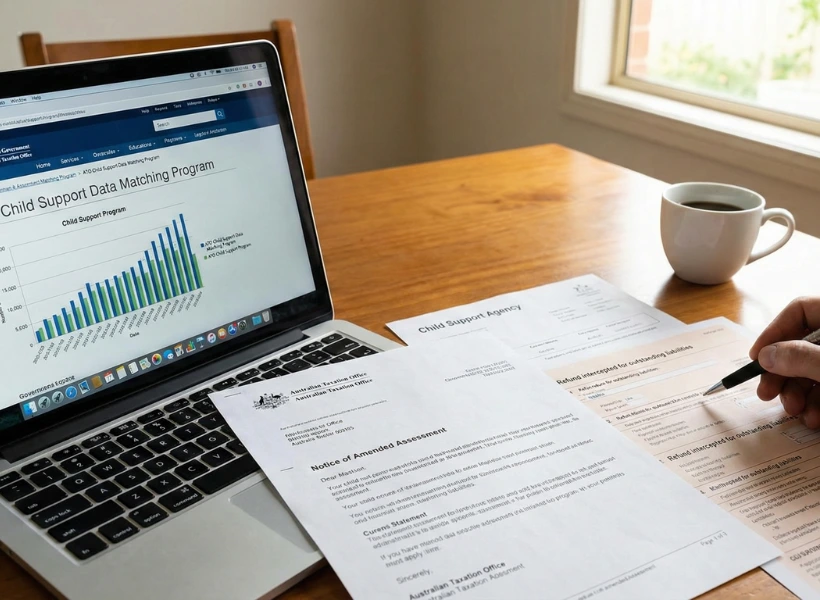
How ATO Child Support Data Matching Affects Tax Returns

The Australian Taxation Office continues to expand its use of data matching programs to improve compliance and accuracy across the tax system. One key initiative that affects many individuals is the child support data matching program, which will apply across multiple income years.

For taxpayers who pay or receive child support, understanding how this data is used and how it may affect tax obligations is important. From a financial advisory services perspective, awareness and preparation can help prevent unnecessary issues with lodgements and compliance.

What Is the ATO Child Support Data Matching Program

The Australian Taxation Office has confirmed that it will collect child support data from Services Australia for the 2025 to 2027 income years.

This data will be matched against existing ATO records to identify inconsistencies, missing lodgements and potential compliance issues. The ATO has indicated that records relating to up to 300,000 individuals may be obtained each financial year under this program.

Official information about ATO data matching programs is available on the ATO website.
https://www.ato.gov.au/about-ato/commitments-and-reporting/in-detail/privacy-and-information-gathering/data-matching-programs

What Information Is Being Matched

The data collected under this program includes personal and child support related details. This may involve names, addresses, phone numbers and dates of birth, as well as child support reference numbers, role types and child support categories.

The purpose of matching this information is to ensure that income reported to Services Australia aligns with income reported to the ATO. Differences between the two may prompt further review or contact from the ATO.

Why the ATO Is Using Child Support Data

The ATO has outlined several objectives for this program. One key aim is to help Services Australia more accurately assess child support obligations and improve the collection of outstanding child support debts.

Another important goal is identifying individuals who may have failed to lodge tax returns or who may not have met their lodgement obligations. In some cases, the ATO may also contact individuals to confirm whether a tax return is required for a particular year.

This approach reflects a broader compliance strategy used by many financial advisory firms to encourage early correction rather than enforcement.

How This Can Affect Taxpayers

For many taxpayers, the data matching process will have no impact if their records are accurate and up to date. However, issues can arise where income has been underreported, tax returns have not been lodged, or information provided to different agencies does not align.

Individuals who receive or pay child support may be unaware that discrepancies between agencies can trigger ATO attention. This is where professional accounting services can assist in reviewing records and resolving issues early.

Common Issues Identified Through Data Matching

Data matching often highlights practical issues rather than deliberate non compliance. These can include missed tax returns, outdated personal details, incorrectly reported income or misunderstandings about reporting obligations.

Regular reviews with a business finance advisor or accountant help ensure that information remains consistent across agencies and that obligations are met correctly.

What Taxpayers Should Do Now

Taxpayers who are involved in child support arrangements should review their tax lodgement history and ensure all required returns have been submitted. It is also important to check that income information provided to Services Australia matches tax records.

Engaging financial advisory services allows individuals to address potential issues before the ATO initiates contact. Early action often leads to simpler outcomes and reduced stress.

How Professional Advice Can Help

ATO data matching programs are designed to identify gaps and inconsistencies. While this may sound concerning, it also provides an opportunity for taxpayers to correct errors and finalise obligations.

Working with experienced accounting services ensures that lodgements are accurate, records are complete and communication with the ATO is handled professionally. Financial advisory firms play an important role in helping taxpayers understand their position and respond appropriately if contacted.

At JMB Tax, we assist individuals by reviewing tax histories, clarifying reporting obligations and liaising with the ATO where required. Our approach focuses on accuracy, compliance and peace of mind.

Frequently Asked Questions

Q. Does the ATO automatically penalise taxpayers through data matching?

No. Data matching is primarily used to identify discrepancies. In many cases, the ATO contacts taxpayers to clarify information or request lodgement before any penalties are considered.

Q. Who is affected by the child support data matching program?

Individuals who pay or receive child support during the 2025 to 2027 income years may be included. The program applies to a large number of taxpayers.

Q. What happens if my records do not match?

The ATO may contact you to request clarification, lodgement of missing returns or updated information. Professional advice can help manage this process.

Q. Do I need to take action if everything is correct?

If your tax returns are up to date and accurate, no action may be required. However, reviewing your records provides reassurance.

Q. Who should I speak to if I am unsure?

A qualified accountant or advisor offering financial advisory services can review your situation and provide guidance.

Conclusion

The ATO child support data matching program highlights the importance of accurate reporting and timely lodgements. While the process may feel intrusive, it is designed to improve accuracy and fairness across the system.

If you pay or receive child support and want confidence that your tax affairs are in order, JMB Tax can help. Our financial advisory services and accounting support are designed to assist Australian taxpayers with clarity, compliance and confidence.

Categories
Taxation

Can the ATO Stop You From Leaving Australia Over Tax Debt

Many Australians are surprised to learn that unpaid tax debts can, in serious cases, affect their ability to leave the country. The Australian Taxation Office has strengthened its approach to debt collection, and one of the strongest enforcement tools available is the departure prohibition order.

From the perspective of financial advisory firms, this issue highlights the importance of early action, structured planning and clear communication with the ATO. Understanding how these powers work can help individuals and business owners avoid unnecessary disruption.

What Is a Departure Prohibition Order

A departure prohibition order, commonly referred to as a DPO, is a legal measure that allows the Australian Taxation Office to prevent a person from leaving Australia if they have significant unpaid tax liabilities and are not engaging with the ATO to resolve them.

According to information shared by the ATO, these orders are used as part of a broader shift towards improving payment performance and strengthening debt collection. Since July 2025, the ATO has issued more departure prohibition orders than in the entire previous financial year, demonstrating a clear change in enforcement activity.

Official ATO information on departure prohibition orders can be found here:
https://www.ato.gov.au/individuals-and-families/paying-the-ato/debt-and-insolvency/departure-prohibition-orders 

Who Can Be Affected by an ATO Travel Ban

Departure prohibition orders are not limited to large corporations. They can apply to individuals, company directors and business owners who have outstanding tax debts and have failed to take reasonable steps to address them.

This often includes situations where tax returns have not been lodged, payment plans have not been established, or previous agreements with the ATO have been ignored. In many cases, people affected are running a financial planning business or small enterprise and underestimate how quickly unresolved issues can escalate.

Why the ATO Uses These Powers

The ATO has stated that departure prohibition orders are used where there is a high risk that a taxpayer may leave Australia without resolving their tax obligations. The aim is not punishment but to encourage engagement and payment.

This aligns with the approach taken by many business advisory service providers, where early intervention and cooperation are key to resolving financial issues before they become severe.

The ATO has publicly confirmed cases where taxpayers were prevented from boarding flights due to deliberate non payment of significant tax debts. These examples reinforce the seriousness of the enforcement action.

Common Situations That Lead to Travel Restrictions

Most people do not face a travel ban overnight. These situations usually develop over time.

Common factors include repeated failure to lodge tax returns, unpaid income tax or BAS liabilities, ignored ATO correspondence, and unrealistic payment expectations. Weak internal systems and poor record keeping often contribute, which is why a reliable business accounting service is critical for prevention.

How Professional Advice Can Reduce Risk

Facing ATO enforcement action can feel overwhelming, but professional support makes a significant difference. Working with an accountant who provides accountant financial advice allows taxpayers to understand their options clearly.

An accountant financial advisor can assist with reviewing outstanding obligations, preparing overdue lodgements and negotiating realistic payment arrangements with the ATO. In more complex situations, coordination between an accountant and financial planner ensures both compliance and long term financial stability are addressed.

This combined approach is often recommended by experienced financial advisory firms, particularly where personal and business finances are closely linked.

Can a Departure Prohibition Order Be Avoided or Lifted

In many cases, yes. The ATO may decide not to issue a departure prohibition order if the taxpayer demonstrates genuine engagement and takes steps to resolve the debt.

This may involve entering into a formal payment plan, lodging all outstanding returns, or providing evidence of financial hardship. Seeking support from a financial advisor and accountant early greatly improves the chances of avoiding escalation.

The ATO has discretion to revoke a departure prohibition order once it is satisfied that appropriate arrangements are in place.

The Importance of Early Engagement

The key message from the ATO is clear. Ignoring tax obligations increases risk. Early engagement reduces it.

Proactive planning supported by accountant financial advice and structured financial review can prevent matters from reaching an enforcement stage. This is particularly important for business owners who travel frequently or manage multiple financial commitments.

Frequently Asked Questions

Q. Can the ATO really stop someone from leaving Australia?

Yes. Under Australian law, the ATO can issue a departure prohibition order to prevent a person with serious unpaid tax debts from leaving the country.

Q. Does this apply only to business owners?

No. Individuals, directors and others with significant tax debts can be affected if they fail to engage with the ATO.

Q. Will the ATO warn me before issuing an order?

In many cases, the ATO attempts to contact taxpayers before taking enforcement action. Ignoring communication increases the risk of a departure prohibition order being issued.

Q. Can professional advice help avoid a travel ban?

Yes. Engaging a financial advisor and accountant early can help resolve issues before enforcement action is taken.

Q. Where can I find official ATO information?

The ATO provides detailed guidance on its website regarding tax debt and departure prohibition orders.

Final Thoughts

The ability of the ATO to stop individuals from leaving Australia over unpaid tax debt is a powerful reminder that tax compliance should not be delayed. These measures are increasingly used where taxpayers fail to engage or resolve outstanding obligations.

If you have concerns about unpaid tax, upcoming travel or ATO communication, JMB Tax can help. Our team works across advisory and compliance, providing support that combines accounting expertise with strategic financial guidance. We assist clients with clarity, professionalism and a practical path forward.

Categories
Taxation

Why Professional Tax Advice Matters for Australian Individuals and Businesses

Managing your tax responsibilities in Australia can be confusing because the rules change frequently, and every person has a unique financial situation. Many people try to handle taxes on their own, but even small mistakes can lead to bigger problems later. Professional taxation advice helps you stay compliant and gives you a stronger understanding of your financial position.

At JMB Consultants, we provide general taxation services that make tax compliance simple and stress-free. Our goal is to give you clear guidance, accurate reporting, and practical support so you can make confident financial decisions. Whether you are an individual, an investor, or a business owner, our taxation services are designed to support your long-term goals.

Understanding Your Tax Obligations

Australian tax law covers many areas, and each one can affect you in a different way. This is why working with a trusted tax and financial advisor is valuable. When you know what applies to your situation, you can avoid mistakes and plan ahead.

We assist clients with a wide range of needs, including

  • Income tax for individuals and businesses
  • Capital gains tax
  • GST support and reporting
  • Fringe benefits tax
  • Payroll tax
  • Superannuation-related tax matters
  • Preparation and lodgement of returns

We also guide clients through complex situations by offering a complete accounting and taxation service.

Why Working With Tax Planners Makes a Big Difference

Professional tax planners help you understand the rules and take the right steps at the right time. They look at your financial position and provide practical advice that suits your needs. A skilled tax planner or tax and financial advisor can help you reduce risk, stay compliant, and make better decisions for your future.

Our taxation service is built around helping clients

  • Claim correct deductions
  • Understand complex tax rules
  • Reduce audit risks
  • Plan investments in a tax-effective way
  • Prepare accurate documents for the ATO
  • Stay updated with new tax changes

This support gives you peace of mind and helps you stay in control of your finances.

Real example of why expert tax guidance matters

A recent decision by the Administrative Review Tribunal involved the sale of subdivided farmland near Adelaide. The landowner believed he was simply selling parts of his land and his involvement was passive. However, because he signed ongoing documents, allowed development access, and received progressive payments, the Tribunal found he was carrying on an enterprise. This meant the sales were subject to GST.

This situation shows why proper taxation advice is important. Many people do not realise that normal-looking activities can create tax obligations. When people misunderstand their responsibilities, they may face unexpected tax bills or compliance issues.

At JMB Consultants, we help clients avoid these problems by reviewing their arrangements early and providing clear guidance before they take action.

How JMB Consultants Helps You Stay Compliant

Our team provides a complete accounting and taxation service for individuals and businesses across Australia. We look after your tax needs with accuracy and care. Whether you need help with tax planning, reporting or compliance, we make the process simple.

We assist with

  • Preparing tax returns
  • Managing GST requirements
  • Reviewing contracts and transactions
  • Offering taxation advice that suits your goals
  • Developing effective tax strategies
  • Meeting all ATO deadlines and reporting rules

We focus on helping you stay compliant while also supporting financial growth.

Planning Ahead for Better Outcomes

Good tax planning helps you avoid problems and gives you a better chance of reaching your long-term goals. With the right guidance, you can choose the best structures, manage your investments wisely, and reduce your tax exposure.

Our tax planners work closely with you to

  • Understand your financial objectives
  • Review your current position
  • Recommend strategies that improve results
  • Provide ongoing support throughout the year

With guidance from an experienced tax and financial advisor, you can make informed choices and feel confident about your future.

Conclusion

Taxation in Australia can be complex, but you do not need to handle it alone. Professional taxation services help you stay compliant, avoid costly mistakes, and build a strong financial foundation. The recent Tribunal example shows how important it is to have correct advice before entering into any financial or property arrangement.

If you want a reliable team that provides high-quality taxation advice and ongoing support, JMB Consultants is here to help. Our goal is to make tax compliance simple, clear, and manageable so you can focus on what matters most.

Categories
SMSF

How to Set Up a Self-Managed Super Fund the Right Way in Australia

A self-managed super fund gives you greater control over your retirement savings. Many Australians choose a self-managed super fund because they want to decide how their money is invested. While this can offer more flexibility, it also comes with rules that every trustee must follow. Setting up a self-managed super fund the right way is important because the Australian Taxation Office expects strict compliance.

As an accountant in Australia who works closely with self-managed super funds, I know the process can feel overwhelming at first. This guide explains each step in simple terms so first-time trustees can begin with confidence.

What a Self-Managed Super Fund Really Means

A self-managed super fund is a private fund where members act as trustees. You are responsible for decisions and administration. You must follow superannuation laws and always act in the best interests of members.

A self-managed super fund in Australia can offer more control, but it also requires more work. This is why many people choose to work with an SMSF specialist or an SMSF specialist advisor.

A professional can help you with:

  • Understanding trustee duties
  • Creating a compliant fund structure
  • Managing accounting records
  • Completing annual audits
  • Meeting Australian Taxation Office requirements

Step 1: Know Your Responsibilities Before You Set Up

Before you begin the self-managed super fund set-up process, it is important to understand what trustees must do. Being a trustee is a legal responsibility, and the ATO expects accurate reporting and compliance.

Trustees must:

  • Keep financial and administrative records
  • Organise an independent annual audit
  • Lodge SMSF tax returns and compliance documents
  • Manage contributions and pension payments
  • Follow the sole purpose test
  • Make investment decisions that follow the written strategy

If these rules are not followed, your fund can become non-compliant. This may lead to higher taxes or penalties. For this reason, many trustees choose SMSF accounting services to help stay on track.

Step 2: Create the Correct SMSF Structure

Setting up a self-managed super fund involves several important steps. This is not a simple account opening process. You must create a structure that meets all superannuation and Australian Taxation Office rules.

The setup process includes:

  • Preparing a compliant trust deed
  • Choosing individual trustees or a corporate trustee
  • Registering the fund with the ATO
  • Creating trustee declarations
  • Setting up a bank account for the fund
  • Registering for an Australian Business Number and Tax File Number

Each step must be completed correctly to avoid delays or compliance issues. A specialist SMSF advisor can help you complete all documentation with confidence

Step 3: Create an Investment Strategy That Meets ATO Rules

Every self-managed super fund in Australia must have a written investment strategy. This strategy guides how the fund will invest money and must be reviewed regularly.

A strong investment strategy covers:

  • The risks involved in each type of investment
  • The expected return over time
  • How the fund will be diversified
  • Liquidity needs for future expenses
  • Insurance requirements for members
  • How the fund will meet retirement goals

If an investment strategy is missing or incomplete, the fund may fail its audit. Professional support makes this step simple and compliant.

Step 4: Meet Your Ongoing Trustee Responsibilities

Once the self-managed super fund is active, trustees must follow ongoing compliance rules.

Key responsibilities include:

  • Tracking contributions
  • Keeping accurate accounting records
  • Preparing annual financial statements
  • Lodging your SMSF annual return
  • Completing an annual audit
  • Updating investment strategy when needed
  • Responding to ATO notices

Important ATO Warning for SMSF Trustees

Recently, the ATO has seen an increase in SMSFs failing to respond correctly to release authorities. A release authority is an official instruction from the ATO that tells the fund to release money to pay tax liabilities, such as:

  • Excess concessional contributions
  • Excess non-concessional contributions
  • Division 293 tax assessments

Many funds are either:

  • Not responding within the required ten business days
  • Responding incorrectly by releasing the wrong amount
  • Failing to lodge the release authority statement

These mistakes can lead to penalties. This is a common problem for new trustees who do not fully understand their responsibilities. Using SMSF accounting services helps prevent these issues because professionals handle ATO communication and reporting on your behalf.

Step 5: Manage Accounting, Reporting, and Annual Audits

A self-managed super fund must keep accurate and detailed records. This is essential for audits and for demonstrating compliance with Australian Taxation Office rules.

Fund administration includes:

  • Recording all income and expenses
  • Tracking asset values
  • Preparing financial statements
  • Coordinating with an independent auditor
  • Managing tax and compliance lodgements

Many trustees choose ongoing SMSF accounting services because accurate reporting protects the fund from compliance risks and saves time.

Why Working with an SMSF Specialist Makes a Difference

Setting up and managing a self-managed super fund is a long-term commitment. An SMSF specialist or SMSF specialist advisor can help trustees make informed decisions and avoid costly mistakes.

Professional support provides:

  • Clear guidance on fund structure
  • Help preparing investment strategies
  • Accurate accounting and reporting
  • Peace of mind during audits
  • Strong compliance management
  • Protection from common ATO issues

An SMSF specialist ensures your fund is not just compliant but also set up for long-term financial success.

Conclusion

A self-managed super fund can be an excellent way to grow your retirement savings. When it is set up the right way, it provides control, flexibility, and the opportunity to build long-term wealth. With the right support and careful planning, trustees can enjoy the benefits of an SMSF without the stress of managing everything alone.

If you are considering setting up a self-managed super fund, speaking with an SMSF specialist advisor is one of the best steps you can take. Professional guidance helps you stay compliant, organised, and confident about your financial future.

JMB Consultants Pty Ltd is not a licenced financial planner or authorised representative or a financial planner. JMB Consultants Pty Ltd does not provide any financial advice, and you should seek personal financial planning advice before opening an SMSF, transferring any funds into SMSF and before making any investments.  Our services are limited to tax planning, preparation, and compliance, along with accounting and related advisory assistance. We do not offer financial advice or guidance pertaining to investment strategies, asset allocation, or specific decisions related to managing Self Managed Superannuation Funds (SMSFs). Our expertise remains focused on tax compliance, accounting, and related financial reporting within the framework of existing regulations. For matters concerning SMSF investment strategies, financial planning, or regulatory compliance specific to Self Managed Superannuation Funds, we recommend consulting a licensed financial advisor or SMSF specialist. Our services do not encompass or replace the need for independent financial advice in these areas. While we strive to provide accurate and reliable tax and accounting services, we do not accept liability for any decisions or actions taken based solely on the information or guidance provided within the scope of our services. The information available on this form, our website or shared by our staff is general in nature and should not be construed as specific financial advice tailored to your individual circumstances.

If you have any more questions about any details, please contact us at (03) 9886 8488.