JMB Consultants

Categories
Taxation

Holiday Home Tax Deductions: What Rental Property Owners Can and Cannot Claim

If you own a property that doubles as a holiday home, the Australian Taxation Office has released significant new guidance that directly affects what you can and cannot claim as a tax deduction. The updated guidance, finalised on 20 May 2026, draws a clear and important distinction between properties that are genuinely operated to produce income and properties that are primarily held for personal holidays or recreation.

This distinction matters because it determines whether most property-related expenses such as interest, council rates, body corporate fees, and depreciation are deductible at all. Under the new guidance, a property classified as a leisure facility rather than an income-producing asset may have most of its deductions denied, even if it generates some rental income during the year.

This blog explains the new guidance in plain terms, including what has changed, how the ATO applies its primary purpose test, what you can and cannot claim, how apportionment works, and what record keeping is required from 1 July 2026.

What Has Changed: The New ATO Guidance

On 20 May 2026, the ATO released three new documents that update and clarify how it assesses rental property income and deductions, with a particular focus on properties that are also used as holiday homes.

The three documents are:

  • TR 2026/1 (Taxation Ruling): Sets out the ATO’s views on when income from the use of a rental property is assessable and when expenses can be claimed as deductions. This ruling applies retrospectively and replaces earlier ATO guidance on rental properties.
  • PCG 2026/2 (Practical Compliance Guideline): Explains how to determine whether a property is being used to produce assessable income on commercial terms, and how to apportion deductions between income-producing and non-income-producing periods.
  • PCG 2026/3 (Practical Compliance Guideline): Sets out the ATO’s compliance approach for holiday homes, including the specific risk indicators the ATO will assess when reviewing deduction claims for mixed-use properties.

The ATO’s overview of this new guidance is available on the ATO rental property newsroom page. This guidance is particularly important for owners of properties at the coast, in alpine regions, or in other holiday destinations who rent their property through short-term accommodation platforms or traditional holiday rental agencies.

Who Does This Guidance Affect?

This guidance applies to any residential property owner who uses their property personally for some part of the year and rents it out for the remainder. It covers short-term accommodation through digital platforms such as Airbnb and Stayz, traditional holiday rental arrangements, and any mixed-use property where there is both personal use and rental income.

The Primary Purpose Test

The central question under the new guidance is whether your property is primarily held to generate assessable income, or primarily held for your own holidays and recreation.

The ATO now applies a three-step approach when assessing income and deductions for rental properties that may also be used as holiday homes:

  • Step 1: Is the property being used to produce assessable income?
  • Step 2: Is this property a holiday home under the ATO’s definition?
  • Step 3: What deductions can be claimed, and how should they be apportioned?

A property is treated as a holiday home if it is used, or held for use, for your holidays or recreation, or the holidays or recreation of your family members or friends, at no charge or at a reduced rate.

The primary purpose question is not simply answered by counting how many days the property was rented versus how many days you stayed there. The ATO looks at the overall pattern of use, how the property is advertised, the rates charged, whether you actively pursue bookings during high-demand periods, and whether you are genuinely maximising rental income or primarily treating the property as a personal asset that earns incidental income.

When Deductions Are Denied: The Leisure Facility Classification

If the ATO determines that your property is not used primarily to earn assessable income, it may be classified as a leisure facility. Under this classification, the majority of property-related deductions are not available.

The following types of expenses are denied for a property classified as a leisure facility:

  • Interest on the loan used to acquire or improve the property
  • Council rates and water rates
  • Body corporate fees and levies
  • Capital works deductions (the building write-off)
  • Decline in value of furniture, appliances, and fittings inside the property
  • General maintenance and repair expenses
  • Insurance premiums for the property

This represents a significant change for property owners who have historically claimed a proportion of these expenses based on the number of days the property was available for rent. Under the new guidance, availability alone is no longer sufficient if the ATO’s overall assessment is that the primary purpose of holding the property is personal use.

What You Can Always Claim

Regardless of how the property’s primary purpose is assessed, certain direct rental-related expenses remain deductible whenever the property is actually occupied by paying guests. These expenses have an exclusive and direct connection to the rental activity itself and are not denied even when broader deductions are restricted.

Expenses that are always deductible when the property is actually rented out include:

  • Advertising costs incurred to find guests or tenants, including platform listing fees
  • Cleaning costs incurred after a guest stay
  • Booking fees and commissions paid to platforms or rental agencies
  • Linen costs incurred specifically for guest use
  • Any other costs that arise directly from and only from a specific rental period

These direct rental expenses remain available because they have no private use component. They are incurred as a direct result of the rental activity and would not be incurred at all if the property were not being rented.

When Partial Deductions Apply: The Apportionment Rules

If your property is mainly used to produce income but has a small amount of private use, such as a week or a few weekends during the off-season where there was no booking or a very low prospect of one, you may still be able to claim a deduction. However, expenses must be apportioned and you cannot claim for any period of private use.

The ATO’s guidance makes an important distinction about what counts as private use. A period when your property was genuinely available for rent but simply had no bookings does not automatically count as private use. The key factors are whether the property was available on genuine commercial terms during that period, meaning:

  • It was advertised in ways that gave it broad exposure to potential guests
  • The rental rate was comparable to similar properties in the area
  • Booking requests were actively monitored and responded to
  • You did not turn away bookings to preserve the property for personal use

By contrast, periods when you or your family used the property personally, or when access was blocked or reserved for personal use regardless of whether you actually stayed there, are private use periods and must be excluded from any deduction calculation.

How Apportionment Is Calculated in Practice

When apportionment is required, eligible expenses are divided between deductible periods and non-deductible periods. The deductible periods are those when the property was either occupied by paying guests or genuinely available for rent on commercial terms.

A straightforward example of how this works:

  • Property available for rent on commercial terms: 46 weeks of the year
  • Property used privately by the owner or family: 6 weeks of the year
  • Apportioned deduction available: 46/52 of eligible expenses

Note that periods when the property was nominally available but where bookings were restricted, declined, or blocked for personal access purposes are not treated as available for rent. The ATO will look at the actual pattern of use and availability, not just what was stated in advertising.

Risk Indicators the ATO Looks For

PCG 2026/3 sets out the specific factors the ATO will assess when determining whether a holiday home is genuinely income-producing or primarily a leisure asset. The full document is available on the ATO’s legal database. Property owners whose arrangements show the following characteristics face a higher risk of deductions being reviewed and denied:

  • Blocking out periods of peak rental demand such as school holidays, Easter, and peak summer or winter seasons for personal use
  • Charging family members or friends below-market rates for use of the property
  • Limited advertising, or advertising that does not genuinely expose the property to paying guests
  • Rental rates that are significantly below comparable properties in the same area and location
  • Declining or not responding to booking enquiries in order to preserve the property for personal use
  • Significant personal storage, permanently reserved rooms, or other arrangements that reduce the property’s availability as a rental

Properties that do not show these characteristics, where the owner actively maximises the commercial return and only uses the property personally during genuine off-peak periods when there is no realistic prospect of a booking, are in a stronger position to claim the full range of available deductions.

The Transitional Period: What This Means for Your 2025/26 Return

The ATO has confirmed a transitional compliance approach. It will not apply compliance resources to review deduction claims for holiday homes incurred before 1 July 2026, where the property arrangements were in place before 12 November 2025.

This means the 2025/26 income year may be the last year in which existing arrangements are protected from review under the new guidance. For the 2025/26 return covering expenses between 1 July 2025 and 30 June 2026, existing arrangements entered into before November 2025 are generally protected by the transitional approach.

From 1 July 2026, the new guidance applies fully without the transitional protection. Property owners who have been claiming interest, rates, and other property expenses under arrangements that PCG 2026/3 would place in the higher-risk category should review those arrangements before the new financial year begins and before lodging their 2025/26 return.

Record Keeping Requirements

Under the new guidance, property owners who wish to claim deductions for holiday homes must be able to demonstrate the income-producing nature of the property with documentary evidence. Good record keeping is your primary protection in the event of an ATO review.

The records you should maintain include:

  • A complete log of all periods when the property was occupied by paying guests, including dates, nightly rates, and total income received
  • A log of all periods of personal use, including dates, who used the property, and any charge applied
  • Evidence of active marketing during periods the property was available, such as platform listing screenshots, booking portal histories, or communications with rental agents
  • Records confirming the rental rates offered were comparable to similar properties in the area
  • Receipts and invoices for all expenses claimed as deductions
  • Platform booking histories and payout statements for all income received through digital platforms

The ATO’s new guidance specifically looks at whether the property was available on commercial terms and whether your records support that assessment. Without contemporaneous records, it is very difficult to defend deduction claims if the ATO raises a question about your property’s primary purpose.

Official Resources

The following ATO publications and pages are directly relevant to the new holiday home guidance:

Disclaimer: This article is intended as general information only and does not constitute legal or financial advice. The information is based on ATO guidance including TR 2026/1, PCG 2026/2, and PCG 2026/3 as finalised on 20 May 2026. Tax rules and ATO guidance can change, and individual circumstances vary. You should seek professional advice tailored to your specific situation before lodging your return or adjusting your rental property arrangements.


Categories
Taxation

$20,000 Instant Asset Write-Off Extended: What Small Business Owners Need to Know

Good News for Small Businesses

If you run a small business in Australia, there is some welcome news heading into the 2025-26 financial year. The Federal Government has passed legislation extending the $20,000 Instant Asset Write-Off (IAWO) by a further 12 months, with the scheme now running until 30 June 2026.

This is a significant opportunity for eligible businesses to reduce their taxable income, free up cash flow, and reinvest in the tools and equipment that keep their operations moving.

In this blog, we break down exactly what the IAWO means, who qualifies, what assets are covered, and what you need to do before the deadline.

What Is the Instant Asset Write-Off?

The Instant Asset Write-Off is a tax concession that allows eligible small businesses to immediately deduct the full business portion of the cost of an asset in the same year it is purchased, rather than depreciating it gradually over many years.

In simple terms: instead of claiming a small deduction each year over the life of an asset, you claim the entire deduction at once. This reduces your taxable income in the current year, which means a lower tax bill and better cash flow for your business.

According to the Australian Taxation Office (ATO), the IAWO is a component of the simplified depreciation rules available to small business entities. If your business chooses to apply these rules, you must apply them to all depreciating assets (with some exceptions).

Who Is Eligible?

To access the $20,000 IAWO in the 2025-26 income year, your business must meet the following conditions:

  1. Aggregated Annual Turnover Under $10 Million Your business (including the turnover of any connected entities or affiliates) must have an aggregated annual turnover of less than $10 million in either the 2024-25 or 2025-26 income year.
  2. You Must Be Carrying On a Business. Your business must be actively carrying on operations during the 2025-26 income year.
  3. You Must Choose the Simplified Depreciation Rules. This is a common point of confusion. If your business does not opt into the simplified depreciation rules for 2025-26, you will not have access to the IAWO, even if you meet all other conditions. Make sure this is discussed with your tax adviser when preparing your return.

What Assets Are Covered?

To qualify for the write-off, each asset must:

  • Costs less than $20,000 (excluding GST if you are registered for GST, or including GST if you are not)
  • Be first used or installed ready for use between 1 July 2025 and 30 June 2026
  • Be used for a taxable (business) purpose

The good news is that both new and second-hand assets are eligible, giving businesses flexibility when sourcing equipment.

The $20,000 Limit Applies Per Asset

This is an important detail: the $20,000 threshold applies on a per-asset basis. This means you can write off multiple assets in the same year, as long as each asset costs less than $20,000. For example, if you purchase three pieces of equipment at $15,000, $12,000, and $18,000, respectively, all three may be eligible for an immediate deduction, provided they meet all other criteria.

What About Assets That Cost $20,000 or More?

If an asset costs $20,000 or more (at or over the threshold), it cannot be immediately deducted under the IAWO. Instead, it must be added to the small business depreciation pool, where it is depreciated at 15% in the first income year and 30% each income year after that. The ATO’s simpler depreciation rules page has more detail on how pooling works.

Part Business, Part Private? Apportionment Applies

If an asset is used for both business and private purposes, you can only claim the business-use portion of the cost. For example, if you purchase a laptop for $3,000 and use it 70% for business and 30% for personal use, your deductible amount is $2,100 (70% of $3,000).

Always keep records that clearly support the business-use percentage you claim. The ATO pays close attention to mixed-use asset claims, particularly for vehicles and home office equipment.

Can You Claim Improvement Costs Too?

Yes, in certain circumstances. If you have already written off an asset under the simplified depreciation rules in a prior income year, you may also be able to immediately deduct the first improvement cost incurred between 1 July 2025 and 30 June 2026, provided that the improvement cost is less than $20,000.

This is a nuance that is easy to overlook, so if you have upgraded or improved existing assets, speak to our office about whether those costs can also be claimed immediately.

Key Dates and Deadlines

Requirement Detail
Asset cost Less than $20,000 (per asset)
First used or installed, ready for use Between 1 July 2025 and 30 June 2026
Eligible turnover Under $10 million (aggregated)
Claim in 2025-26 income year tax return

Important: The asset must actually be in use or installed and ready for use by 30 June 2026. Simply ordering or purchasing an asset before that date is not enough if it has not yet been delivered and is not ready to operate.

What Happens After 30 June 2026?

Without further government action, the IAWO threshold is legislated to return to just $1,000 from 1 July 2026. This makes the current window a genuine opportunity for small businesses to invest in assets before the more generous threshold disappears.

What Assets Are Excluded?

Not every asset qualifies under the simplified depreciation rules. Common exclusions include:

  • Horticultural plants
  • Capital works, such as building construction costs
  • Assets that are leased to another party under a depreciating asset lease
  • Assets that are not used for a taxable purpose

For a full list of excluded assets, refer to the ATO’s assets and exclusions page.

A Note on Cars

Vehicles can be written off under the IAWO, but there are specific rules that apply. The car cost limit (also known as the luxury car limit) caps the cost of a car that can be used for depreciation purposes, regardless of what you actually paid. For the 2025-26 income year, this limit is relevant if your vehicle purchase price is high. It is also important to maintain a logbook to substantiate the business-use percentage of any vehicle.

Why This Matters for Your Tax Planning

The extension of the IAWO is not just about claiming a deduction. It is an opportunity to think strategically about:

  • Equipment upgrades you have been putting off
  • Tools or technology that could improve productivity
  • Second-hand assets that might be available at a lower cost

Purchasing eligible assets before 30 June 2026 and having them in use by that date allows you to bring forward a tax deduction that would otherwise be spread over years.

Need Help Claiming the Write-Off?

The IAWO is a valuable concession, but it comes with conditions that are easy to get wrong, particularly around eligibility, business-use apportionment, and the simplified depreciation rules election.

At JMB Consultants, we can help you:

  • Confirm whether your business is eligible
  • Identify which assets qualify for an immediate deduction
  • Handle improvement cost claims on previously written-off assets
  • Ensure your depreciation elections are correctly reflected in your tax return

Contact us before 30 June 2026 to make the most of this extended opportunity.

The information in this blog is general in nature and does not constitute personal tax advice. Please seek professional advice to confirm how these rules apply to your specific circumstances.

Categories
Taxation

GST Credits Have a 4 Year Time Limit: What Businesses Need to Know

Many Australian businesses are unaware that GST credits do not last forever. If GST credits are not claimed within the allowed timeframe, they can be permanently lost. This can have a direct impact on cash flow and overall business finances.

From the perspective of financial advisory services, this rule highlights why regular reviews and proactive planning are essential. A trusted business finance advisor can help businesses avoid missed opportunities and costly compliance issues.

What Is the 4 Year Time Limit on GST Credits

The Australian tax system places a strict time limit on claiming GST credits and fuel tax credits. In most cases, these credits must be claimed within four years from the due date of the original Business Activity Statement where the credit could have been claimed.

Once this four year period expires, the Australian Taxation Office has no discretion to allow the credit, even if the business was entitled to it. This rule is separate from the general review period and is applied very strictly.

Official guidance on this rule is provided by the Australian Taxation Office.
https://www.ato.gov.au/businesses-and-organisations/gst-excise-and-indirect-taxes/gst/claiming-gst-credits/time-limits-for-claiming-gst-credits

Why This Rule Matters for Businesses

Unclaimed GST credits represent real money. For some businesses, especially those with high expenses or fuel usage, the value of missed credits can be significant.

Many financial advisory firms see businesses discover unclaimed credits only when it is too late. This often happens when records are not reviewed regularly or when BAS lodgements are handled reactively rather than strategically.

Strong accounting services play a critical role in preventing this. Accurate and timely BAS preparation ensures credits are identified and claimed within the allowable period.

Common Reasons Businesses Miss GST Credits

There are several reasons GST credits are missed or delayed.

Some businesses change accountants and historical records are not reviewed properly. Others focus only on current BAS lodgements and overlook past periods. In some cases, poor record keeping or incorrect coding of expenses leads to credits being missed entirely.

This is where proper accounting servicing makes a difference. Ongoing review processes reduce the risk of credits approaching expiry unnoticed.

What If GST Credits Are Close to Expiring

If GST credits are nearing the end of the four year time limit, businesses still have options, but timing is critical.

Instead of requesting amendments through general correspondence, businesses may be able to claim eligible credits in their next BAS if it falls within the four year period. Another option is lodging a revised BAS for the original period, which is often processed faster. In some cases, lodging a valid objection before the time limit expires may also be appropriate.

Professional small business accounting services can assess which approach is suitable and help action it correctly before credits are lost.

The Importance of Record Keeping

The Australian Taxation Office requires businesses to keep complete and accurate records of all transactions, including tax invoices and expense documentation. These records support GST credit claims and must be retained for compliance purposes.

Official ATO record keeping guidance for businesses is available here.
https://www.ato.gov.au/businesses-and-organisations/preparing-lodging-and-paying/record-keeping-for-business

Without proper documentation, GST credits may be denied even if claimed within time. This highlights why structured accounting business services are essential, especially as businesses grow.

How Professional Advice Can Protect Your Business

The four year GST credit rule shows why GST compliance should not be treated as a once a quarter task. It requires ongoing oversight and strategic review.

A business accounting service that works alongside financial advisory services helps businesses identify risks early, recover missed credits where possible and improve internal processes to avoid repeat issues.

At JMB Tax, we support businesses by reviewing historical BAS lodgements, assessing GST risks and ensuring credits are claimed correctly and on time. Our approach focuses on long term compliance and financial clarity.

Frequently Asked Questions

Q. What happens if GST credits expire?

Once the four year time limit has passed, the Australian Taxation Office cannot allow the credit. The entitlement is lost permanently, even if the business was eligible.

Q. Is the four year rule the same as the ATO review period?

No. The four year GST credit time limit is separate and more strict than the general review period.

Q. Can I amend a BAS to claim old GST credits?

Yes, but only if the amendment is lodged within the four year time limit. After that, amendments cannot include additional GST credits.

Q. How can businesses avoid missing GST credits?

Regular BAS reviews, accurate record keeping and proactive accounting support reduce the risk. Working with experienced accounting services and a business finance advisor helps ensure credits are not overlooked.

Q. Who should review my GST position?

A qualified accountant or advisor offering financial advisory services and GST experience can review your BAS history and advise on any action required.

Final Thoughts

GST credits are a valuable part of business cash flow, but they come with strict time limits. Understanding and managing these limits is essential for financial health and compliance.

If you are unsure whether your business has unclaimed GST credits approaching the four year deadline, JMB Tax can help. Our financial advisory services and business accounting service are designed to support Australian businesses with clarity, accuracy and confidence.

Categories
Taxation

How ATO Child Support Data Matching Affects Tax Returns

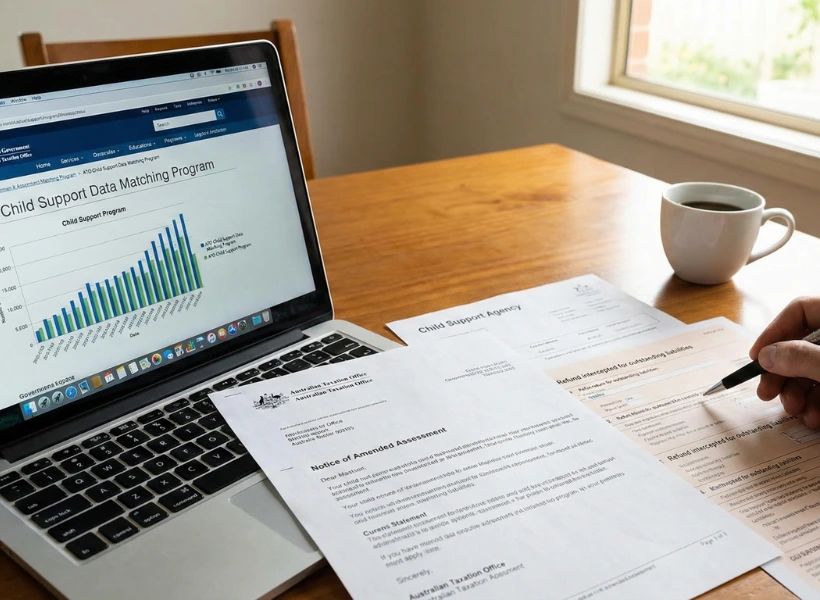
The Australian Taxation Office continues to expand its use of data matching programs to improve compliance and accuracy across the tax system. One key initiative that affects many individuals is the child support data matching program, which will apply across multiple income years.

For taxpayers who pay or receive child support, understanding how this data is used and how it may affect tax obligations is important. From a financial advisory services perspective, awareness and preparation can help prevent unnecessary issues with lodgements and compliance.

What Is the ATO Child Support Data Matching Program

The Australian Taxation Office has confirmed that it will collect child support data from Services Australia for the 2025 to 2027 income years.

This data will be matched against existing ATO records to identify inconsistencies, missing lodgements and potential compliance issues. The ATO has indicated that records relating to up to 300,000 individuals may be obtained each financial year under this program.

Official information about ATO data matching programs is available on the ATO website.
https://www.ato.gov.au/about-ato/commitments-and-reporting/in-detail/privacy-and-information-gathering/data-matching-programs

What Information Is Being Matched

The data collected under this program includes personal and child support related details. This may involve names, addresses, phone numbers and dates of birth, as well as child support reference numbers, role types and child support categories.

The purpose of matching this information is to ensure that income reported to Services Australia aligns with income reported to the ATO. Differences between the two may prompt further review or contact from the ATO.

Why the ATO Is Using Child Support Data

The ATO has outlined several objectives for this program. One key aim is to help Services Australia more accurately assess child support obligations and improve the collection of outstanding child support debts.

Another important goal is identifying individuals who may have failed to lodge tax returns or who may not have met their lodgement obligations. In some cases, the ATO may also contact individuals to confirm whether a tax return is required for a particular year.

This approach reflects a broader compliance strategy used by many financial advisory firms to encourage early correction rather than enforcement.

How This Can Affect Taxpayers

For many taxpayers, the data matching process will have no impact if their records are accurate and up to date. However, issues can arise where income has been underreported, tax returns have not been lodged, or information provided to different agencies does not align.

Individuals who receive or pay child support may be unaware that discrepancies between agencies can trigger ATO attention. This is where professional accounting services can assist in reviewing records and resolving issues early.

Common Issues Identified Through Data Matching

Data matching often highlights practical issues rather than deliberate non compliance. These can include missed tax returns, outdated personal details, incorrectly reported income or misunderstandings about reporting obligations.

Regular reviews with a business finance advisor or accountant help ensure that information remains consistent across agencies and that obligations are met correctly.

What Taxpayers Should Do Now

Taxpayers who are involved in child support arrangements should review their tax lodgement history and ensure all required returns have been submitted. It is also important to check that income information provided to Services Australia matches tax records.

Engaging financial advisory services allows individuals to address potential issues before the ATO initiates contact. Early action often leads to simpler outcomes and reduced stress.

How Professional Advice Can Help

ATO data matching programs are designed to identify gaps and inconsistencies. While this may sound concerning, it also provides an opportunity for taxpayers to correct errors and finalise obligations.

Working with experienced accounting services ensures that lodgements are accurate, records are complete and communication with the ATO is handled professionally. Financial advisory firms play an important role in helping taxpayers understand their position and respond appropriately if contacted.

At JMB Tax, we assist individuals by reviewing tax histories, clarifying reporting obligations and liaising with the ATO where required. Our approach focuses on accuracy, compliance and peace of mind.

Frequently Asked Questions

Q. Does the ATO automatically penalise taxpayers through data matching?

No. Data matching is primarily used to identify discrepancies. In many cases, the ATO contacts taxpayers to clarify information or request lodgement before any penalties are considered.

Q. Who is affected by the child support data matching program?

Individuals who pay or receive child support during the 2025 to 2027 income years may be included. The program applies to a large number of taxpayers.

Q. What happens if my records do not match?

The ATO may contact you to request clarification, lodgement of missing returns or updated information. Professional advice can help manage this process.

Q. Do I need to take action if everything is correct?

If your tax returns are up to date and accurate, no action may be required. However, reviewing your records provides reassurance.

Q. Who should I speak to if I am unsure?

A qualified accountant or advisor offering financial advisory services can review your situation and provide guidance.

Conclusion

The ATO child support data matching program highlights the importance of accurate reporting and timely lodgements. While the process may feel intrusive, it is designed to improve accuracy and fairness across the system.

If you pay or receive child support and want confidence that your tax affairs are in order, JMB Tax can help. Our financial advisory services and accounting support are designed to assist Australian taxpayers with clarity, compliance and confidence.

Categories
Taxation

Can the ATO Stop You From Leaving Australia Over Tax Debt

Many Australians are surprised to learn that unpaid tax debts can, in serious cases, affect their ability to leave the country. The Australian Taxation Office has strengthened its approach to debt collection, and one of the strongest enforcement tools available is the departure prohibition order.

From the perspective of financial advisory firms, this issue highlights the importance of early action, structured planning and clear communication with the ATO. Understanding how these powers work can help individuals and business owners avoid unnecessary disruption.

What Is a Departure Prohibition Order

A departure prohibition order, commonly referred to as a DPO, is a legal measure that allows the Australian Taxation Office to prevent a person from leaving Australia if they have significant unpaid tax liabilities and are not engaging with the ATO to resolve them.

According to information shared by the ATO, these orders are used as part of a broader shift towards improving payment performance and strengthening debt collection. Since July 2025, the ATO has issued more departure prohibition orders than in the entire previous financial year, demonstrating a clear change in enforcement activity.

Official ATO information on departure prohibition orders can be found here:
https://www.ato.gov.au/individuals-and-families/paying-the-ato/debt-and-insolvency/departure-prohibition-orders 

Who Can Be Affected by an ATO Travel Ban

Departure prohibition orders are not limited to large corporations. They can apply to individuals, company directors and business owners who have outstanding tax debts and have failed to take reasonable steps to address them.

This often includes situations where tax returns have not been lodged, payment plans have not been established, or previous agreements with the ATO have been ignored. In many cases, people affected are running a financial planning business or small enterprise and underestimate how quickly unresolved issues can escalate.

Why the ATO Uses These Powers

The ATO has stated that departure prohibition orders are used where there is a high risk that a taxpayer may leave Australia without resolving their tax obligations. The aim is not punishment but to encourage engagement and payment.

This aligns with the approach taken by many business advisory service providers, where early intervention and cooperation are key to resolving financial issues before they become severe.

The ATO has publicly confirmed cases where taxpayers were prevented from boarding flights due to deliberate non payment of significant tax debts. These examples reinforce the seriousness of the enforcement action.

Common Situations That Lead to Travel Restrictions

Most people do not face a travel ban overnight. These situations usually develop over time.

Common factors include repeated failure to lodge tax returns, unpaid income tax or BAS liabilities, ignored ATO correspondence, and unrealistic payment expectations. Weak internal systems and poor record keeping often contribute, which is why a reliable business accounting service is critical for prevention.

How Professional Advice Can Reduce Risk

Facing ATO enforcement action can feel overwhelming, but professional support makes a significant difference. Working with an accountant who provides accountant financial advice allows taxpayers to understand their options clearly.

An accountant financial advisor can assist with reviewing outstanding obligations, preparing overdue lodgements and negotiating realistic payment arrangements with the ATO. In more complex situations, coordination between an accountant and financial planner ensures both compliance and long term financial stability are addressed.

This combined approach is often recommended by experienced financial advisory firms, particularly where personal and business finances are closely linked.

Can a Departure Prohibition Order Be Avoided or Lifted

In many cases, yes. The ATO may decide not to issue a departure prohibition order if the taxpayer demonstrates genuine engagement and takes steps to resolve the debt.

This may involve entering into a formal payment plan, lodging all outstanding returns, or providing evidence of financial hardship. Seeking support from a financial advisor and accountant early greatly improves the chances of avoiding escalation.

The ATO has discretion to revoke a departure prohibition order once it is satisfied that appropriate arrangements are in place.

The Importance of Early Engagement

The key message from the ATO is clear. Ignoring tax obligations increases risk. Early engagement reduces it.

Proactive planning supported by accountant financial advice and structured financial review can prevent matters from reaching an enforcement stage. This is particularly important for business owners who travel frequently or manage multiple financial commitments.

Frequently Asked Questions

Q. Can the ATO really stop someone from leaving Australia?

Yes. Under Australian law, the ATO can issue a departure prohibition order to prevent a person with serious unpaid tax debts from leaving the country.

Q. Does this apply only to business owners?

No. Individuals, directors and others with significant tax debts can be affected if they fail to engage with the ATO.

Q. Will the ATO warn me before issuing an order?

In many cases, the ATO attempts to contact taxpayers before taking enforcement action. Ignoring communication increases the risk of a departure prohibition order being issued.

Q. Can professional advice help avoid a travel ban?

Yes. Engaging a financial advisor and accountant early can help resolve issues before enforcement action is taken.

Q. Where can I find official ATO information?

The ATO provides detailed guidance on its website regarding tax debt and departure prohibition orders.

Final Thoughts

The ability of the ATO to stop individuals from leaving Australia over unpaid tax debt is a powerful reminder that tax compliance should not be delayed. These measures are increasingly used where taxpayers fail to engage or resolve outstanding obligations.

If you have concerns about unpaid tax, upcoming travel or ATO communication, JMB Tax can help. Our team works across advisory and compliance, providing support that combines accounting expertise with strategic financial guidance. We assist clients with clarity, professionalism and a practical path forward.

Categories
Taxation

Why Professional Tax Advice Matters for Australian Individuals and Businesses

Managing your tax responsibilities in Australia can be confusing because the rules change frequently, and every person has a unique financial situation. Many people try to handle taxes on their own, but even small mistakes can lead to bigger problems later. Professional taxation advice helps you stay compliant and gives you a stronger understanding of your financial position.

At JMB Consultants, we provide general taxation services that make tax compliance simple and stress-free. Our goal is to give you clear guidance, accurate reporting, and practical support so you can make confident financial decisions. Whether you are an individual, an investor, or a business owner, our taxation services are designed to support your long-term goals.

Understanding Your Tax Obligations

Australian tax law covers many areas, and each one can affect you in a different way. This is why working with a trusted tax and financial advisor is valuable. When you know what applies to your situation, you can avoid mistakes and plan ahead.

We assist clients with a wide range of needs, including

  • Income tax for individuals and businesses
  • Capital gains tax
  • GST support and reporting
  • Fringe benefits tax
  • Payroll tax
  • Superannuation-related tax matters
  • Preparation and lodgement of returns

We also guide clients through complex situations by offering a complete accounting and taxation service.

Why Working With Tax Planners Makes a Big Difference

Professional tax planners help you understand the rules and take the right steps at the right time. They look at your financial position and provide practical advice that suits your needs. A skilled tax planner or tax and financial advisor can help you reduce risk, stay compliant, and make better decisions for your future.

Our taxation service is built around helping clients

  • Claim correct deductions
  • Understand complex tax rules
  • Reduce audit risks
  • Plan investments in a tax-effective way
  • Prepare accurate documents for the ATO
  • Stay updated with new tax changes

This support gives you peace of mind and helps you stay in control of your finances.

Real example of why expert tax guidance matters

A recent decision by the Administrative Review Tribunal involved the sale of subdivided farmland near Adelaide. The landowner believed he was simply selling parts of his land and his involvement was passive. However, because he signed ongoing documents, allowed development access, and received progressive payments, the Tribunal found he was carrying on an enterprise. This meant the sales were subject to GST.

This situation shows why proper taxation advice is important. Many people do not realise that normal-looking activities can create tax obligations. When people misunderstand their responsibilities, they may face unexpected tax bills or compliance issues.

At JMB Consultants, we help clients avoid these problems by reviewing their arrangements early and providing clear guidance before they take action.

How JMB Consultants Helps You Stay Compliant

Our team provides a complete accounting and taxation service for individuals and businesses across Australia. We look after your tax needs with accuracy and care. Whether you need help with tax planning, reporting or compliance, we make the process simple.

We assist with

  • Preparing tax returns
  • Managing GST requirements
  • Reviewing contracts and transactions
  • Offering taxation advice that suits your goals
  • Developing effective tax strategies
  • Meeting all ATO deadlines and reporting rules

We focus on helping you stay compliant while also supporting financial growth.

Planning Ahead for Better Outcomes

Good tax planning helps you avoid problems and gives you a better chance of reaching your long-term goals. With the right guidance, you can choose the best structures, manage your investments wisely, and reduce your tax exposure.

Our tax planners work closely with you to

  • Understand your financial objectives
  • Review your current position
  • Recommend strategies that improve results
  • Provide ongoing support throughout the year

With guidance from an experienced tax and financial advisor, you can make informed choices and feel confident about your future.

Conclusion

Taxation in Australia can be complex, but you do not need to handle it alone. Professional taxation services help you stay compliant, avoid costly mistakes, and build a strong financial foundation. The recent Tribunal example shows how important it is to have correct advice before entering into any financial or property arrangement.

If you want a reliable team that provides high-quality taxation advice and ongoing support, JMB Consultants is here to help. Our goal is to make tax compliance simple, clear, and manageable so you can focus on what matters most.